
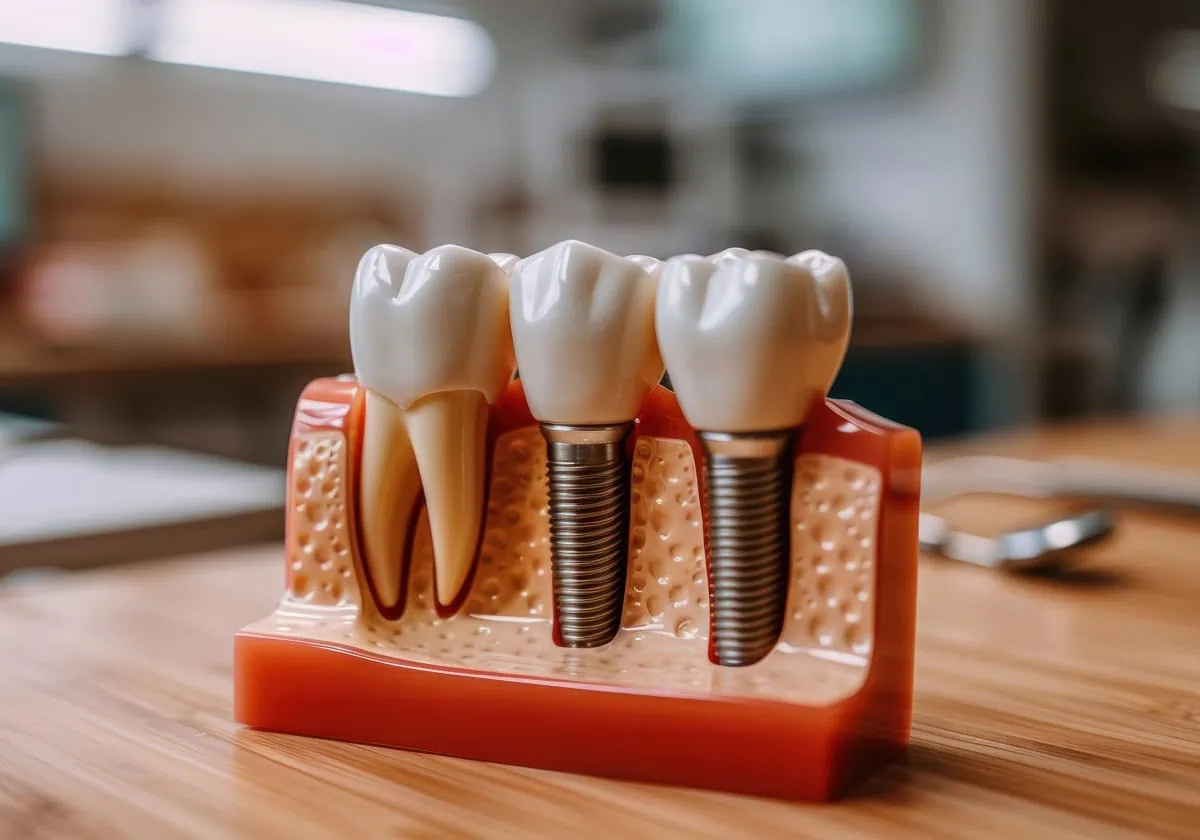
Inlays and onlays in Wexford are often recommended when a tooth needs more support than a filling but does not require a full crown. At Paul B. Gabriel, DMD, PC, these indirect tooth restorations are used to strengthen damaged teeth while prioritizing structural preservation whenever possible. For many patients in the Wexford and North Hills area, this approach offers a balance between durability, function, and the long-term maintenance of healthy tooth structure.
Daily habits common throughout Western Pennsylvania, including coffee consumption, seasonal temperature changes, and nighttime clenching during stressful routines, can gradually weaken enamel and contribute to cracks or moderate decay. Through detailed evaluation and imaging, our team determines whether custom tooth restorations, such as porcelain inlays or onlays, can provide the support your tooth needs without more extensive treatment.
Preserves more natural teeth compared to full crowns
Provides a precise fit through custom tooth restorations
Supports long-term durability under normal bite forces
Addresses moderate damage with conservative cavity repair
Strengthens weakened tooth structure
Blends naturally with surrounding teeth
Helps avoid more extensive procedures when appropriate
Supports better distribution of bite pressure
Designed for long-term function and stability
Allows for more controlled, lab-crafted results
Moderate tooth decay beyond what fillings can support
Cracked or worn tooth surfaces
Old or failing fillings needing replacement
Sensitivity caused by structural compromise
Uneven bite due to damaged tooth surfaces
Cosmetic concerns in visible areas
Discomfort when chewing or biting
These restorations are often recommended when balance is important, repairing damage while preserving healthy tooth structure. The goal is not just to restore, but to do so in a way that supports strength, comfort, and longevity.
Gradual breakdown of enamel and dentin
Reduced natural support over time
Excess pressure on specific teeth
Structural damage affecting integrity
Uneven force distribution during chewing
Natural changes in enamel strength
Used when damage is contained within the grooves of the tooth. This option provides a precise, lab-made restoration that reinforces the area while preserving the surrounding structure. It is often considered when evaluating when to choose inlays over fillings.
Covers a larger portion of the tooth, including one or more cusps. This approach is helpful when damage extends beyond the center of the tooth but does not require a full crown. Patients often ask about the difference between onlays and crowns, which is based on how much of the tooth needs coverage.
Restorative care requires precision and judgment. Knowing when a tooth can be preserved, and how to support it properly, makes a meaningful difference in long-term outcomes.
At Paul B. Gabriel DMD, PC, treatment is guided by a conservative philosophy. Whenever possible, preserving natural tooth structure is prioritized over more extensive procedures. Each restoration is carefully planned to match the tooth’s function, not just its appearance.
Patients often have practical questions, such as the durability of partial tooth repair options or the cost of custom tooth restoration. These are addressed clearly, so you understand both the benefits and the limitations of each option. Care is not rushed, and decisions are made with long-term stability in mind.
They are used to repair moderate damage when a filling is not enough, but a crown is not necessary.
Unlike fillings placed directly in the tooth, these are lab-made indirect tooth restorations designed for a more precise fit.
Yes, they are known for their strength and longevity when properly maintained.
They are designed to match the color and contour of your natural teeth.
In some cases, they allow for structural tooth preservation by avoiding full coverage of the tooth.
Tooth restoration does not always require the most extensive option. In many cases, a more conservative solution can provide both strength and longevity while preserving what is still healthy.
At Paul B. Gabriel DMD, PC, inlays and onlays are centered on finding that balance. If you are experiencing tooth damage or considering your options, we are here to guide you with clarity and care.
Experience a new level of quality dentistry: one where you can feel comfortable throughout your visit and confident in the results of your treatment.
Experience a new level of quality dentistry: one where you can feel comfortable throughout your visit and confident in the results of your treatment.